Water damage and mold response in Palm Beach County
Mold Remediation in West Palm Beach, Florida
We remove water, dry the structure and remediate mold in West Palm Beach homes and businesses. Every job starts with moisture readings at marked points and a written scope, so you can see what is wet, what gets removed and which repairs belong to another trade. Call (561) 960-0937.
2
Specialist services
8+
Areas covered
Written
Scope and findings
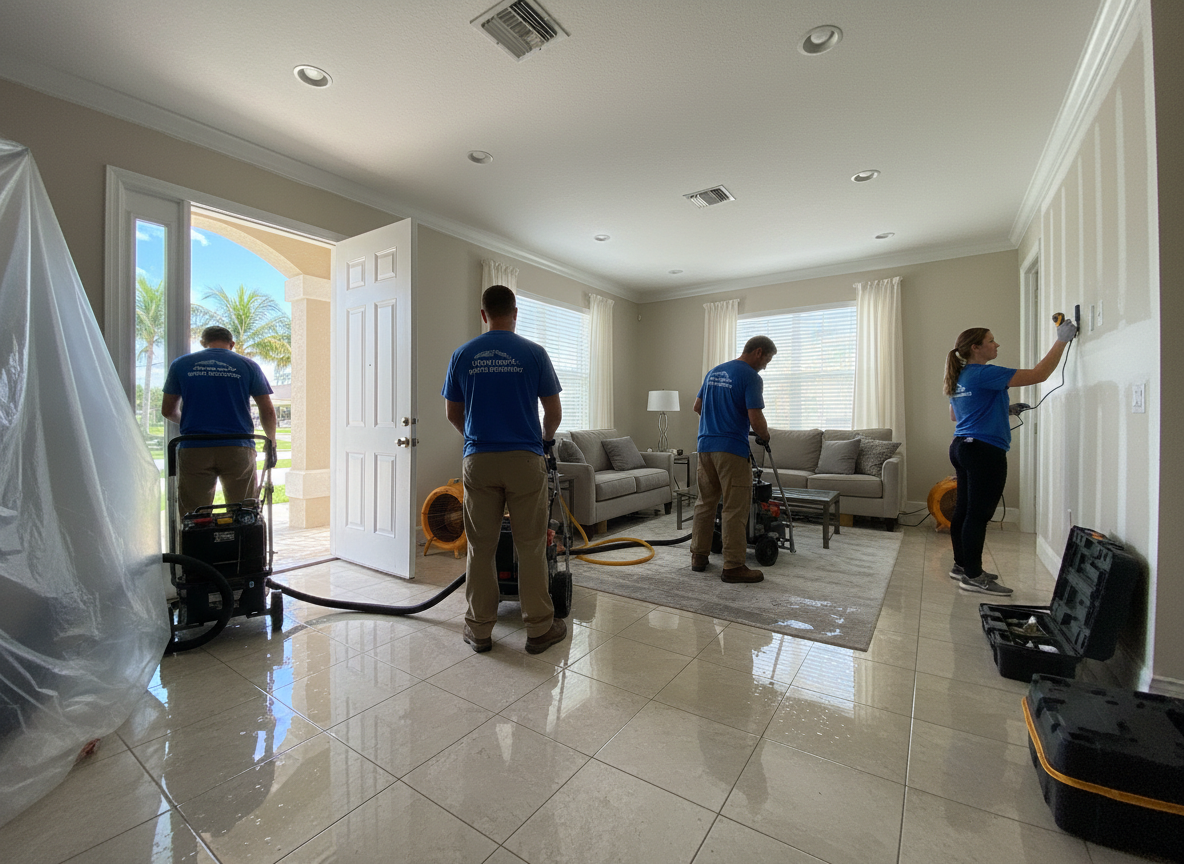
Water, Storm and Mold Services in West Palm Beach
A written scope before any work starts
A water and mold business built around the record
Mold Remediation West Palm Beach Florida is a water restoration and mold remediation business working from 1990 Kirk Rd in Palm Springs, immediately west of West Palm Beach. We take work across West Palm Beach and eight neighbouring Palm Beach County towns: Palm Beach, Lake Worth Beach, Greenacres, Royal Palm Beach, Lantana, Riviera Beach, Lake Park and North Palm Beach.
The business exists because of a pattern we kept seeing on this coast. Water gets into a house, someone lifts the carpet and points a fan at the floor, and three weeks later the baseboard smells. Or a wall is opened, sprayed and closed again while the leak that caused it is still running. The drying and the mold work were treated as separate errands instead of one sequence with measurements at both ends.
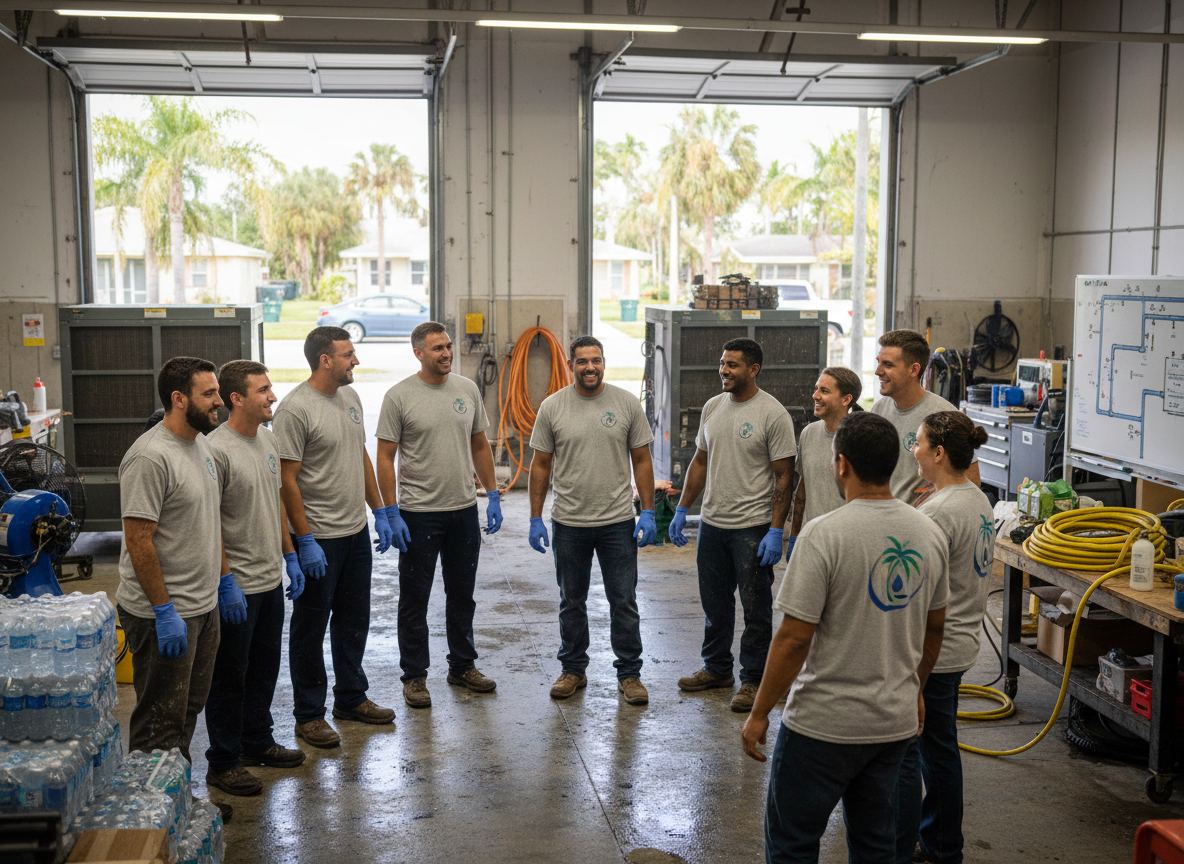
- A written scope before work starts, with emergency work separated from permanent repairs
- Moisture readings marked, photographed and repeated at the same points
- Mold remediation only where growth is confirmed, with the moisture source corrected
How the work is run, not what a badge says
Water damage and mold are mostly a documentation problem before they are a repair problem. The decisions that matter are made in the first two visits: where the moisture boundary sits, what can be dried, what has to come out, and who owns the repair afterwards. That is where we put the effort.
One crew from the first call to the final reading
The people who answer the phone are the people who walk the loss and compare the last readings with day one. Nothing is handed to a rotating subcontractor between the extraction and the final walkthrough, so the person who made the plan is the person who stands behind it in your kitchen.
Moisture readings you can see and repeat
We mark each reading point, photograph the meter and record the number before any material moves. On the last visit we read the same points again in the same order. You end up with a before-and-after record instead of a verbal assurance that the wall felt dry.
A written scope before work starts
Emergency water work, mold remediation and permanent repairs are listed separately in writing. You can see which line is drying, which line is removal and which line belongs to a plumber, roofer or general contractor, and you can approve or stop at any of those boundaries.
Palm Beach County building stock, read properly
A 1950s block ranch west of Dixie Highway, a 1970s stucco house in Greenacres and a terrazzo floor near the water all hold moisture differently. We read the assembly in front of us rather than applying one drying recipe to every address in the county.
Documentation organised for your insurer
Photographs, a moisture log, the source of the water and the scope sit in one file. We do not decide coverage and we do not speak for your adjuster, but the conversation starts from measurements and dates rather than a description over the phone.
An honest handoff when the repair is not ours
Plumbing, roofing, electrical and full rebuilding belong to the trades that own them. At hand-back you get the list of what still needs doing and why, in writing, rather than a promise that we will sort it out quietly under the same invoice.
2
Specialist services
8+
Areas covered
Written
Scope and findings
What to expect, start to finish
Call and safety guidance
Tell us what is wet, which rooms are affected and whether water is still running. If you can reach the fixture or the main safely, we tell you what to shut off and which rooms to keep clear of outlets, panels and standing water until we arrive.
Walk the loss and map the moisture
We read the affected rooms and a dry reference area of the same material, mark each point and photograph the meter. The boundary between wet and dry is drawn on the plan before anything is moved, so the scope has a starting point you can check.
Write the scope and agree the boundaries
The scope separates emergency extraction and drying from material removal and from permanent repairs. You see the sequence and the handoffs before work starts, and anything outside our trades is named as such instead of being absorbed into the job.
Extract, remove and dry
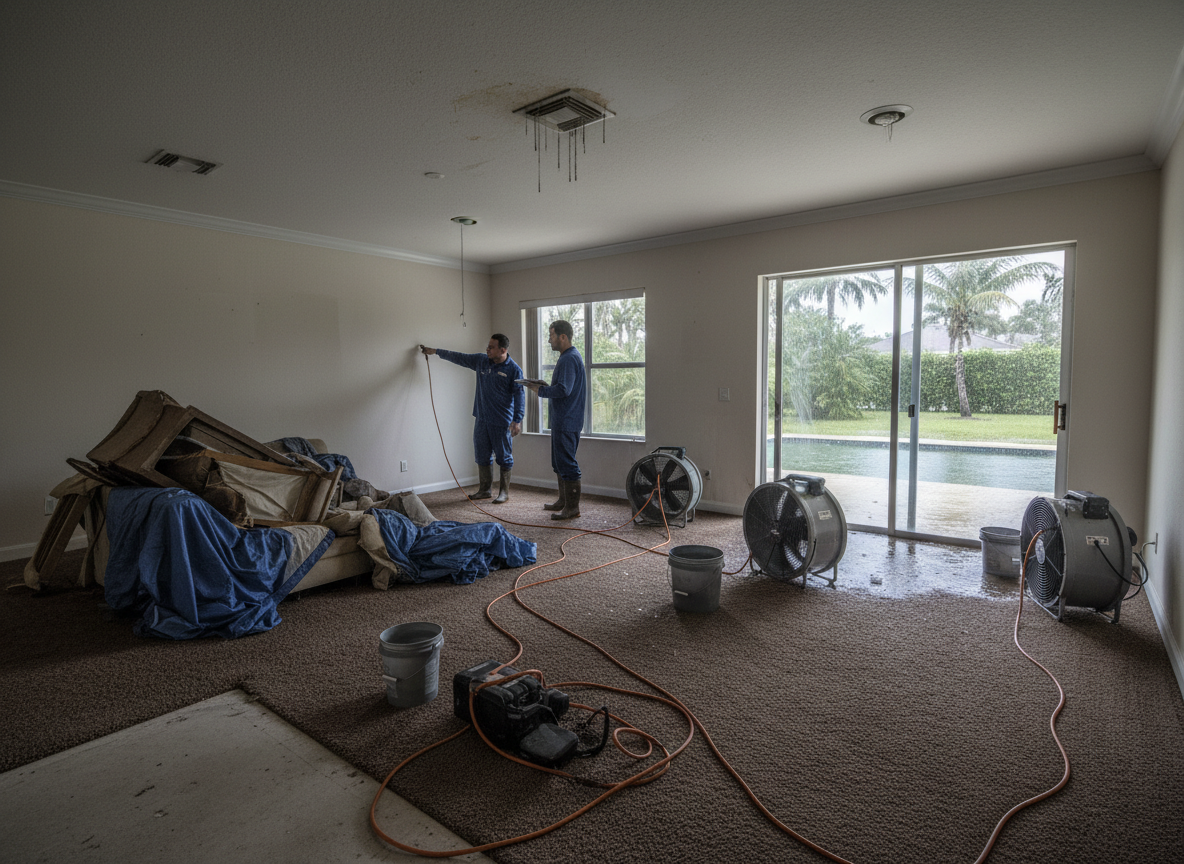
Standing water comes out first, then saturated carpet, pad and material that cannot be dried or has taken on contaminated water. Air movers, dehumidifiers and cavity drying then run against the recorded readings, adjusted daily rather than left running on a timer.
Remediate where mold is confirmed
Where growth is present, the work area is contained, affected material is removed to a defined line, surfaces are cleaned and the moisture source is corrected. Clearance is based on what the readings and the visual inspection show, not on a spray-and-paint pass.
Verify, document and hand back
We read the same points again, compare them with day one, walk the rooms with you and leave the moisture log, photographs and scope in one file. The list of repairs that belong to another trade goes with it, so nothing depends on memory.
Good to know
Water Damage and Mold Questions
Call or send a message and we will talk through the next step.
(561) 960-0937